On a powder-coated part, the first thing we notice is the colour, the light and the uniformity of the surface. However, during use, it quickly becomes clear how well thought out the work that was done before the coating was applied. The paint layer does not work in isolation: the raw material, the contamination during production, the surface preparation and the coating together determine how the part will behave in the coming years. Shot blasting and powder coating are therefore two stations in a common production process that build on each other. Spraying removes some of the surface impurities and creates the right condition for the coating. Powder coating provides the finished surface and the intended protection. The result depends on whether the two operations are adapted to the respective material, geometry and application environment. This relationship is especially important for parts where durability cannot be judged solely by color or coating thickness.
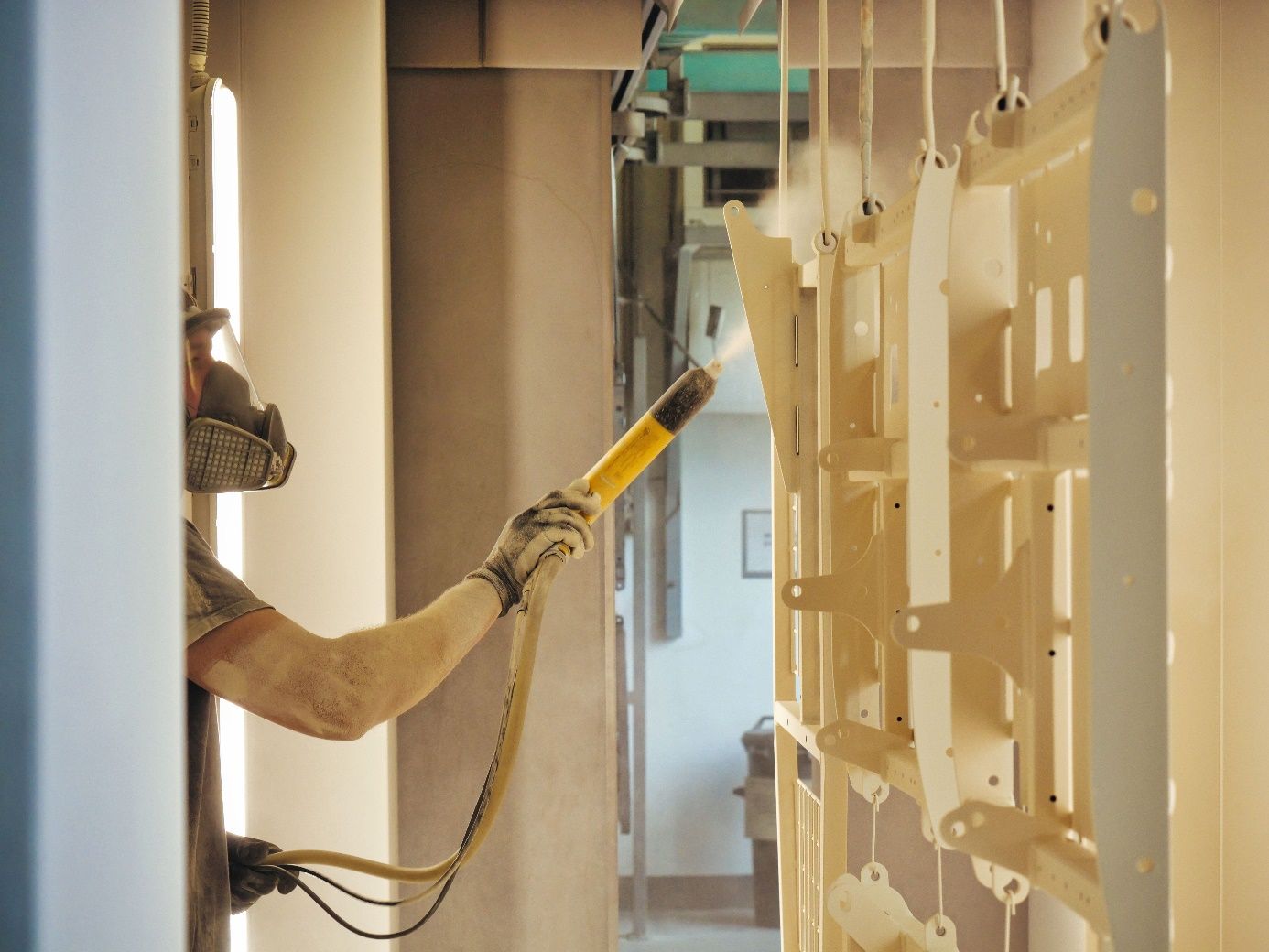
The quality of the coating is already decided by the condition of the surface
A metal part rarely arrives at the surface treatment as if it were directly from the production line and directly into the paint booth. Laser cutting, welding, grinding, storage, and material handling can all leave marks. It can have oil, fingerprints, dust, rust, weld residue, or small burrs that are barely visible at first glance. These details may not always appear significant on the outside of the finished product, but they are important for the adhesion and continuity of the coating. Powder coating should adhere to a properly prepared, clean surface that is suitable for the specific system. If dirt or a loose oxide layer is placed under the coating, it can weaken adhesion and cause separation, blistering, or corrosion over time. The problem is often not visible immediately after painting. A component may still appear uniform in the workshop, and then, during outdoor use, moisture, temperature fluctuations or mechanical stress, it becomes noticeable that the layers do not form a sufficiently stable system. Therefore, the The result of powder coating should not be tied solely to work in the painting booth. The road to the quality of the finished surface begins with an assessment of the production status. Shot blasting is an important tool in this, but correct preparation is a broader process: understanding what material is coming, what has happened to it before, and what surface treatment is required for the intended use.
What does shot blasting do?
During shot blasting, the blasting material of choice collides with the surface of the workpiece. The process can be suitable for removing rust, old coating, weld residues and other surface contaminants, while also affecting the roughness of the surface. The material, shape, size and intensity of the grain have an impact on the surface that is formed. The task is therefore not simply to make the metal “shiny” or “rough”; the goal is to create the right condition for the chosen coating system. Mechanical preparation can be especially useful for steel elements that have corrosion products or manufacturing residues on their surfaces. A properly selected treatment can provide a cleaner base and create a surface profile that helps the coating to adhere. Sharp cutting edges and minor defects resulting from the manufacturing process also require attention: in some cases, they need to be treated separately with deburring or chamfering, because shot blasting is not a substitute for all prior processing. The sequence of operations depends on the condition of the part and the desired end result. However, spraying is not a universal solution for all materials and all dirt. For example, a greasy, oily surface must be cleaned properly before blasting. If oil is present, the treatment can spread the dirt and contaminate the blasting material, so that the next step is no longer based on a clean substrate. Surface cleanliness, degreasing and mechanical preparation are complementary operations. Our company’s surface treatment information also emphasizes that the method of preparation must be adapted to the material, the contamination and further treatment.
How rough should the surface be before powder coating?
Surface roughness is often referred to as if a rougher surface automatically gives better adhesion. The practice is more nuanced. The powder coating must adhere properly to the substrate, and this requires cleanliness and a surface condition that is appropriate for the coating system. A substrate that is too smooth, contaminated or oxidized carries a different risk than a component that is too rough, sensitive or thin. An optimal profile is not a property that can be interpreted in itself, but is the result of a fit between the workpiece and the technology used. The choice of surface profile also depends on the shot blasting material and setting used. The shape, size, hardness of the grain and the duration of the treatment all shape the end result. The same process can have a different effect on a thick steel frame, a thin sheet metal casing or a precision part. In the case of one, the goal is robust cleaning, while in the case of the other, dimensional accuracy and aesthetic surface must also be protected. This is the reason why it is not practical to determine the parameters of shot blasting solely from the coating side. The surface treatment company must be familiar with the raw material, the permissible size change, any joints and the surface requirements for the finished product. The technical data sheets, the production drawing and the agreed surface quality requirements provide the framework. The exact roughness and cleanliness values are therefore always linked to the given component and coating system; a general numerical value alone does not guarantee durability.
The shape of the part is also part of the preparation
During surface treatment, flat, easily accessible surfaces can easily attract attention. However, corners, holes, cut-outs, weld seams, edges and covered surfaces are often the most challenging in terms of durability. The powder coating must also form correctly at different points on the workpiece, and the spraying must also reach surfaces that are more difficult to access due to the complex geometry of the finished part. A laser-cut edge, weld spatter or burr can also affect the continuity of the coating. Above a sharp edge, the coating can thin more easily, and residues around the seam can cause local adhesion problems. Before powder coating, it is therefore not enough to check whether the workpiece is generally clean. Details should also be reviewed: whether there are any inner corners that are difficult to spray, closed sections, hidden joints, or machining marks that require extra preparation. Geometry enters the process at the design stage. If a part is regularly powder coated, it is worth considering surface treatment in addition to manufacturability. Where the design allows it, reducing unnecessary pockets, hard-to-clean gaps or inaccessible surfaces can result in easier and more predictable work. This does not mean that every structure has to be redesigned for the sake of painting. Rather, it is a matter of a realistic expectation of a durable coating by coordinating construction, manufacturing and surface treatment.
Steel, galvanized surface and aluminum require different preparation
Metal parts that look identical cannot necessarily be treated in the same way. Black steel, galvanized steel and aluminium have different surface properties, so they may require a different preparation method. In the case of steel, the removal of rust may be emphasized, in the case of galvanized elements, the protection of the existing zinc layer may also be a task, and in the case of aluminium, the material’s own surface condition and sensitivity must be taken into account. The technology is therefore determined by the name of the raw material and the actual surface condition together. Galvanised steel shows particularly well why the right intensity matters. The zinc layer is part of corrosion protection, so the preparation must help the subsequent coating to adhere without unduly damaging this layer. In such cases, a gentle sweep spraying adapted to the given surface may be appropriate; the method of treatment must be determined based on the condition of the zinc layer and the planned coating system. The powder coating manufacturer’s guidelines specifically emphasize that when mechanically preparing galvanized parts, it is important to preserve the existing layer and remove residual grain or dust. In addition to the raw material, the operating environment also shapes the requirements. An indoor machine casing, an outdoor support structure and a regularly cleaned equipment receive different loads. Humidity, UV radiation, temperature changes, chemicals and mechanical stress play a different role. Therefore, the performance of a coating cannot be judged by the name of the color or powder coating alone. The intended use must be the starting point and the preparation, coating system and method of inspection must be selected for this. Durability depends on the design, condition, environment and the entire technological chain of the workpiece.
The cleaned surface must be protected until coating
After shot blasting, the surface of the workpiece is prepared but not yet finished. Any remaining blasting material and dust must be removed and care must be taken to ensure that the surface is not re-contaminated until it is coated. Storage, manual handling, dust or moisture in the workshop air can all affect the prepared condition. In the case of steel, depending on the environment and the time elapsed, new oxidation can occur, so the sequence and timing of operations must be adapted to the production order. Oil left in the hand or contaminated gloves may seem like a small detail, but can still bring back to the surface what has already been removed during preparation. Handling discipline is therefore not an administrative addition, but part of surface quality. A properly prepared part must be moved cleanly and transferred to powder coating under conditions where the condition of the surface can be maintained. From a process perspective, it is important that preparation and powder coating are not presented as two independent services. If there is no clear transfer between the spray plant and the coating plant, it is more difficult to determine where a subsequent adhesion or surface defect occurred. In sequential operations, the identification of the points of responsibility, the status of the workpiece and the clarification of acceptance criteria help predictable production.
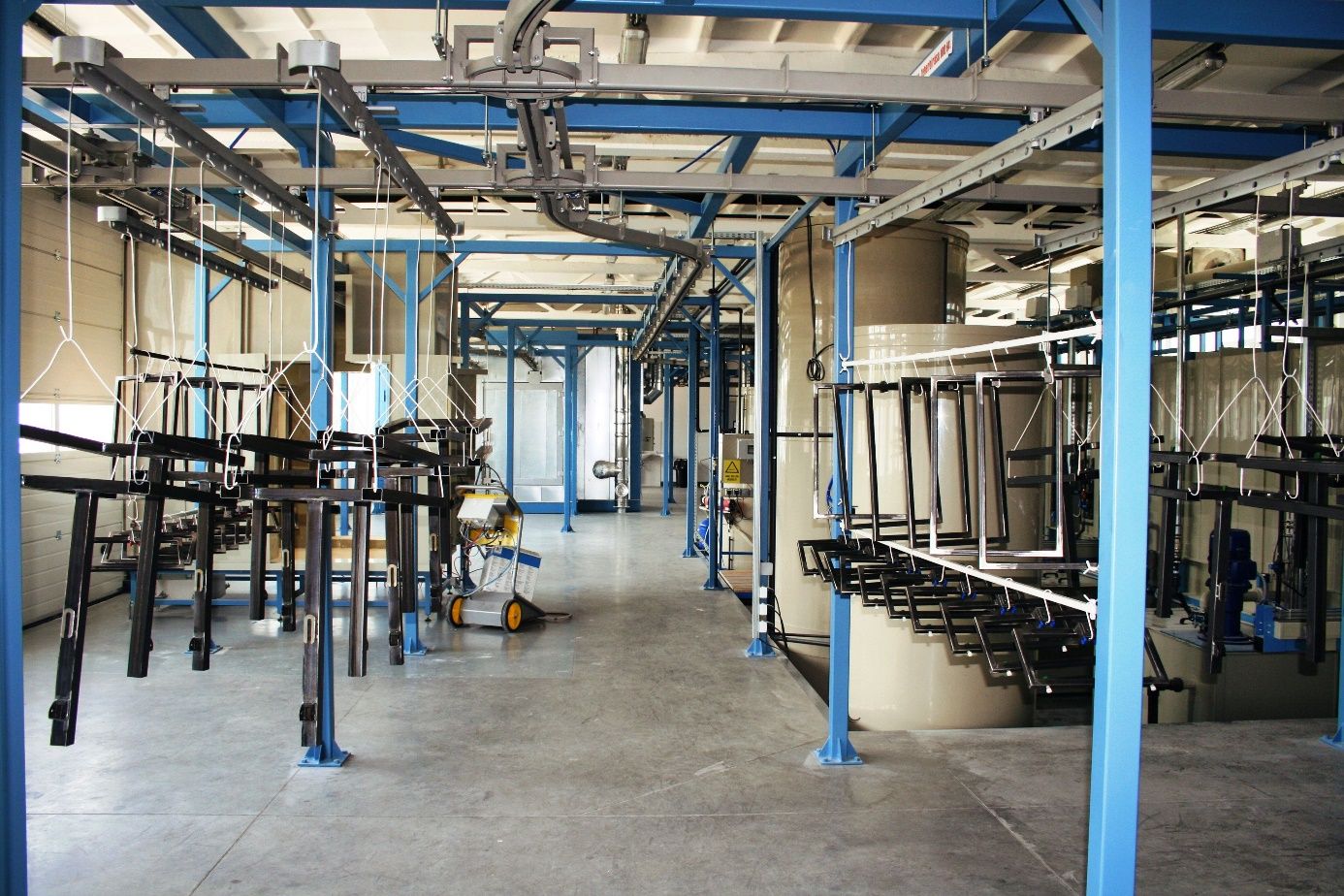
Negotiation on durability starts with use
When discussing the surface treatment needs, it is worth starting from the finished product. Where will the part work? Indoors or outdoors? Is it regularly exposed to moisture, detergent, heat or wear? Will it be placed on a visible surface, where appearance is also important, or will it work inside a machine, where functional protection is the main concern? These questions will help determine the scale of the task and avoid expecting performance from the coating that is not supported by the agreed technology. In the technical conversation before production, in addition to the drawing, the raw material, the previous machining of the part and critical surfaces are also important. If the order only specifies “powder coating”, it does not yet reveal what kind of cleanliness, preparation, appearance or inspection the user expects. More detailed consultation does not mean complicated documentation for all jobs. It is designed to ensure that participants understand the same thing in terms of durability and acceptable surface quality.
The starting point of the work is typically made clear by the following information:
- the size and weight of the raw material and the workpiece, as well as the most important geometric details;
- previous production operations, such as laser cutting, welding, grinding or galvanizing;
- the expected environment and load of the finished part;
- the desired colour, gloss, appearance class and any visible surfaces;
- any specific requirements for the performance, testing or documentation of the coating.
Based on these, it is possible to judge what kind of preparation is justified, whether other cleaning operations are necessary in addition to shot blasting, and what coating requirements are suitable for the component. The specific degree of purity, surface profile, layer thickness and test method must always be determined together with the technical specification, the chosen coating system and the operating environment. Clarification of the conditions in advance also makes subsequent quality control meaningful.
Preparation also manages the risk of reworking
The economic consequences of the surface treatment decision often become apparent only later. If a part does not meet the requirements for use or appearance after powder coating, the repair is not always limited to removing the paint layer and reapplying it. The part must be removed from the production process, inspected, re-prepared and reinserted into further operations. In the case of an assembled product, access can also be more difficult. In addition to surface treatment, the effort can therefore also affect production scheduling, material handling and transport. Therefore, correct preparation should not only be seen as a cost at the beginning of the technological journey. The question is at what risk the connection between the workpiece and the coating can be established and how much uncertainty remains in the process. In the case of a simple part, the requirement can be briefly recorded. In the case of a complex, outdoor or high-value structure, it may be necessary to negotiate the critical surfaces, the test piece, the inspection and the handover conditions in more detail. The right level always depends on the role of the product. An early conversation between the designer, the manufacturer and the surface treatment is especially useful when the drawing can still be modified. A hard-to-reach inner surface, a sharp edge or a closed joint can be treated afterwards, but the solution may require more preparation or special inspection. If these details are already reflected in the RFQ, the technology proposal is brought closer to the real task and comparable offers are generated from the same starting point.
A transfer between the digital drawing and the physical surface is required
In modern manufacturing, part data can typically be tracked in digital drawings and production systems. These can accurately record material, dimensions, and geometric tolerances, but they do not always provide important antecedents for surface treatment. The drawing alone does not show how long the part has been in storage, whether there is oil or treatment marks, or whether weld spatter has been left on a covered surface. The digital documentation and the actual condition of the workpiece must therefore meet at handover. This is not a limitation of digital production data, but a recognition that other questions are being answered. The CAD model shows the shape, and the surface treatment specification describes the required cleanliness, appearance and performance. The production history and physical visual inspection complete the picture. If there is a discrepancy between the drawing assumption and the actual workpiece, it is worth clarifying it before preparation, because after powder coating, it is more difficult to trace back where the planned and actual processes diverged. The role of documents is strong if the participants use the same version and the expectations are not only conveyed verbally. Especially in the case of several production sites or repeat orders, it is important that the drawing, the surface treatment specification and the acceptance condition are available together. The digital order is thus not a substitute for professional visual inspection; it creates a common framework for what needs to be checked on the workpiece and what result is considered appropriate.
Quality becomes visible at several points in the process
During the final inspection, the colour and surface uniformity can be easily visually inspected. However, in order to assess adhesion, layer thickness or corrosion resistance, the test method and acceptance conditions specified in the order may be required. Not all parts require the same test, and no test piece or test panel is automatically a substitute for the actual process control of the workpieces. The inspection must be adapted to the role of the product and the risk. The durability of the coating is determined by several factors: the condition of the raw material, the efficiency of cleaning and pre-treatment, the design of the workpiece, the chosen coating system, and its application and curing. Surface preparation is therefore a prerequisite, but it is not a substitute for the right choice of material or a controlled powder coating process. The entire system can be evaluated if the requirements of the individual steps are in harmony with each other. This approach is also important in preventing complaints and rework. If a coating is damaged prematurely, the explanation may not be a single faulty operation. It may be that the design of the part made cleaning difficult; the abrasive or treatment intensity was not suitable for the base material; the surface was re-contaminated before powder coating; or the finished product is being used in a different environment than specified. Aligning process steps is useful because quality issues can be examined along the path of the workpiece, not just on the finished surface.
One workpiece, shared technological responsibility
The relationship between shot blasting and powder coating can be well managed when the workpiece is seen as part of a single, coherent manufacturing process. Preparation determines the base on which the coating will be applied; the coating system determines what surface condition is required; and the environment in which it is used determines what performance is expected from the finished product. If there is no relationship between these three aspects, “permanent powder coating” can easily remain too general a requirement.
Technical consultation does not have to be complicated. A brief overview of the drawing, the raw material, the operating environment and the visible surfaces can already show where special attention is needed. The processor can thus indicate in good time if a different preparation, more careful spraying or a more precise surface quality requirement is warranted on a part of the part. The customer can compare an offer that describes not only the name of the operation to be performed, but also the actual content of the task.
At Innomechanika, both shot blasting and electrostatic powder coating are available surface treatment services. Knowing the material, design and intended use of the part, it is possible to agree on what preparation is suitable for the coating. In the case of a specific workpiece, the technical drawing, the designation of the raw material and the requirements for the surface provide the common starting point. Thus, the decision does not apply to a single operation, but to the entire surface treatment path of the finished part.