In the medical technology industry, accuracy, cleanliness and reliability are not only an expectation, but a basic requirement. The in the manufacture of devices, implants and diagnostic systems Any micron deviation or material structure defect can be a serious risk. In this environment, the Laser Cutting It is not simply an efficient machining method, but a strategic technology that enables manufacturers to meet the industry’s most stringent requirements — both in terms of precision and documentability. In this article, we explore this area from a professional perspective.
The essence of the technology: micrometer accuracy without thermal effect
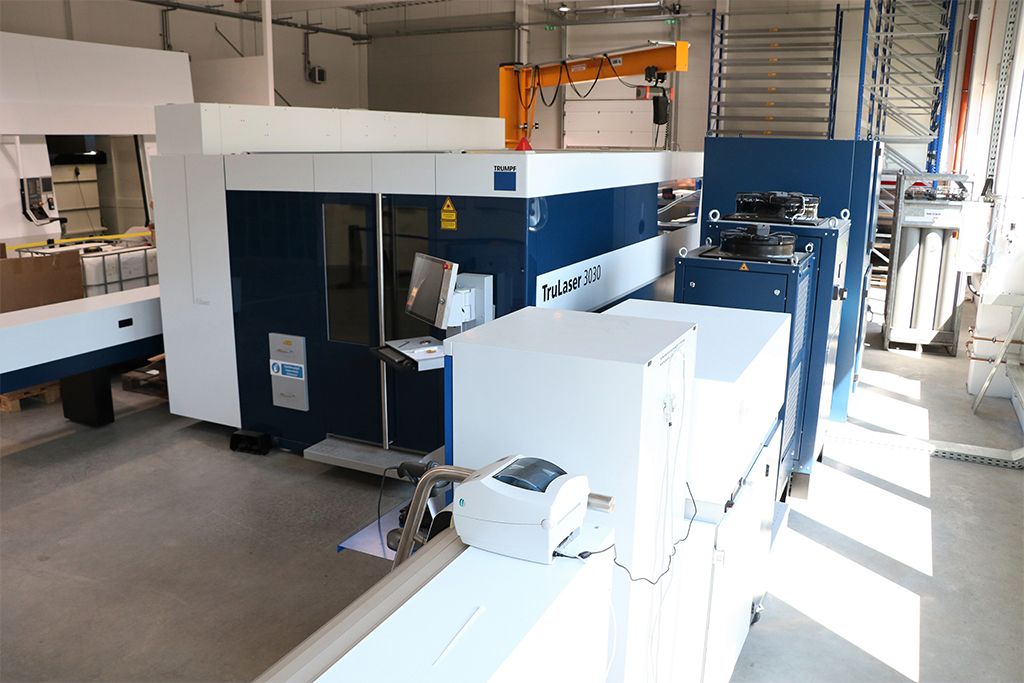
Laser cutting is based on a focused, high-energy beam of light that vaporizes or melts the material at the cutting point. In the medical technology industry, it is typically Fiber lasers and ultrashort pulse lasers (pico- and femtosecond systems) are used. These machines are capable of creating extremely narrow cutting gaps, while the heat-affected zone is practically negligible. This is critical because the material structure of medical devices — especially in the case of titanium, stainless steel or nickel-titanium alloys — cannot be distorted by thermal exposure. A Precision laser cutting Thus, it allows microscopic shapes to be created without any mechanical contact. No tool wear, no deformation, no post-deburring — just a clean, reproducible cutting edge.
Why does the medical industry prefer laser cutting?
The answer can be summed up in three words: precision, clarity, traceability. These concepts are not only crucial from a technological point of view, but also from a business point of view. Why?
Accuracy and repeatability
Laser cutting CNC-controlled, fully automated process. This means that the first and the thousandth pieces are made with the same dimensional tolerance. In the case of medical devices, where accuracy of tenths of a millimeter is often required, this is vital. The possibility of error is practically excluded, the deviation remains below ±5 microns in the entire production process.
Non-contact machining
The laser beam does not physically come into contact with the material. This eliminates dirt, micro-scratches and oxidation caused by the tool. Since the process can also be used in a closed, sterile environment, it is especially advantageous in the production of implants, surgical instruments and diagnostic components.
Excellent cutting quality
By using the appropriate auxiliary gas (e.g. nitrogen or argon), the cutting edge is oxide-free and smooth. This eliminates the need for post-polishing or surface treatment, which reduces production time and increases efficiency.
Areas of application in the medical technology industry
Laser cutting is not associated with a single production stage, but is present throughout the entire value chain of medical device manufacturing — from prototype to series production.
Microsurgical Instruments
Precision components for small, thin-walled components such as microscopic scissors, tweezers, drills, and catheters are often laser-cut. The most important requirements here are dimensional stability and burr-free edges, as they affect the usability and sterilizability of the device.
Stents and implants
Stents are made of extremely complex metal with a fine lattice structure, every micron deviation of which can affect blood flow. Laser cutting ensures that the wall thickness and perforation of the implant exactly match the biomechanical load. Femto laser cutting is particularly suitable for processing nickel-titanium (NiTi) and cobalt-chromium alloys.
Diagnostic Laboratory Instruments
Modern diagnostic systems, such as spectroscopic, analytical or microfluidic equipment, often contain thin steel or polymer plates with precisely designed openings and channels. Laser cutting ensures clarity and geometric precision in these cases as well, which guarantees the reliability of measurements.
House structures, brackets, modules
Both the external and internal metal structural elements of medical devices (e.g. MRI, CT, dialysis machines) are often produced by laser cutting. The technology is also an advantage here, because it minimizes scrap rates and can be quickly adapted to individual production needs.
Quality assurance: documentability and traceability
The production of medical devices is strictly regulated. ISO 13485, FDA 21 CFR Part 820 and other international regulations all require full traceability of the manufacturing process.
Integrated software of modern laser cutting systems automatically captures:
- The laser parameters (power, pulse length, focal length).
- The position of the workpiece.
- Material type settings.
- All data is stored in a digital production log.
This solution not only meets compliance requirements, but also provides a huge advantage in terms of quality management: defects can be traced and corrected immediately, and the process can be statistically evaluated.
Economy and production flexibility
Laser cutting may initially seem like a more expensive technology than traditional machining, but it often results in significant savings in terms of total cost of production (TCO).
- No tooling costs – all geometries are digitally controlled by the software, making product changes quick and flexible.
- Minimal material loss – thin cutting clearance and precise positioning optimize sheet yield.
- Can be automated and integrated – laser cutting cells can be connected to robotic dosing and control systems, which increases throughput and reduces labor requirements.
For manufacturers, this means that even small and medium-sized series can be produced economically while quality requirements are fully met.
Technological developments and trends
In recent years, laser cutting in the medical technology industry has not only become widespread, but is constantly evolving.
The most important directions:
- Ultra-short pulse lasers (USP): virtually heat-free cutting, ideal for micromachining.
- Laser tube cutting on 5 axes: production of complex spatial shapes, e.g. for implant networks.
- Integrated optical inspection: real-time on-camera quality control that immediately detects defects.
- Combining additive and laser technologies: precision post-processing of 3D-printed medical components with laser cutting.
These improvements will further increase the accuracy, reliability and flexibility of production, which is the key to competitiveness in the medical supply chain.
Aspects of the customer side
In the medical technology industry, customers — whether they are OEMs, R companies, or hospital procurement partners — are not just looking for a supplier, but a technology partner.
The value of a laser cutting service provider lies not only in the machine park, but also in process stability, quality assurance and professional competence.
- For a customer, it is a crucial aspect that the partner:
- Know the behavior of medical materials and validation requirements.
- It uses documented, certified processes.
- It is capable of handling both small series prototypes and serial production.
- It guarantees data security and confidentiality.
Where these conditions are met, laser cutting means not only technological but also business stability in the long run.
Professional concluding remarks
Laser cutting in medical technology production is no longer just a precision procedure, but part of the basic philosophy of quality-assured production. Technology that not only cuts precisely, but also makes the manufacturing process predictable, documentable and repeatable in an industry where tolerances can literally mean life. The laser beam not only shapes the material, but also the approach to production: it ushers in the era of error-free, data-driven and sterile production. Manufacturers who reach this level do not simply produce parts, but They build trust — micron by micron, at the speed of light.